
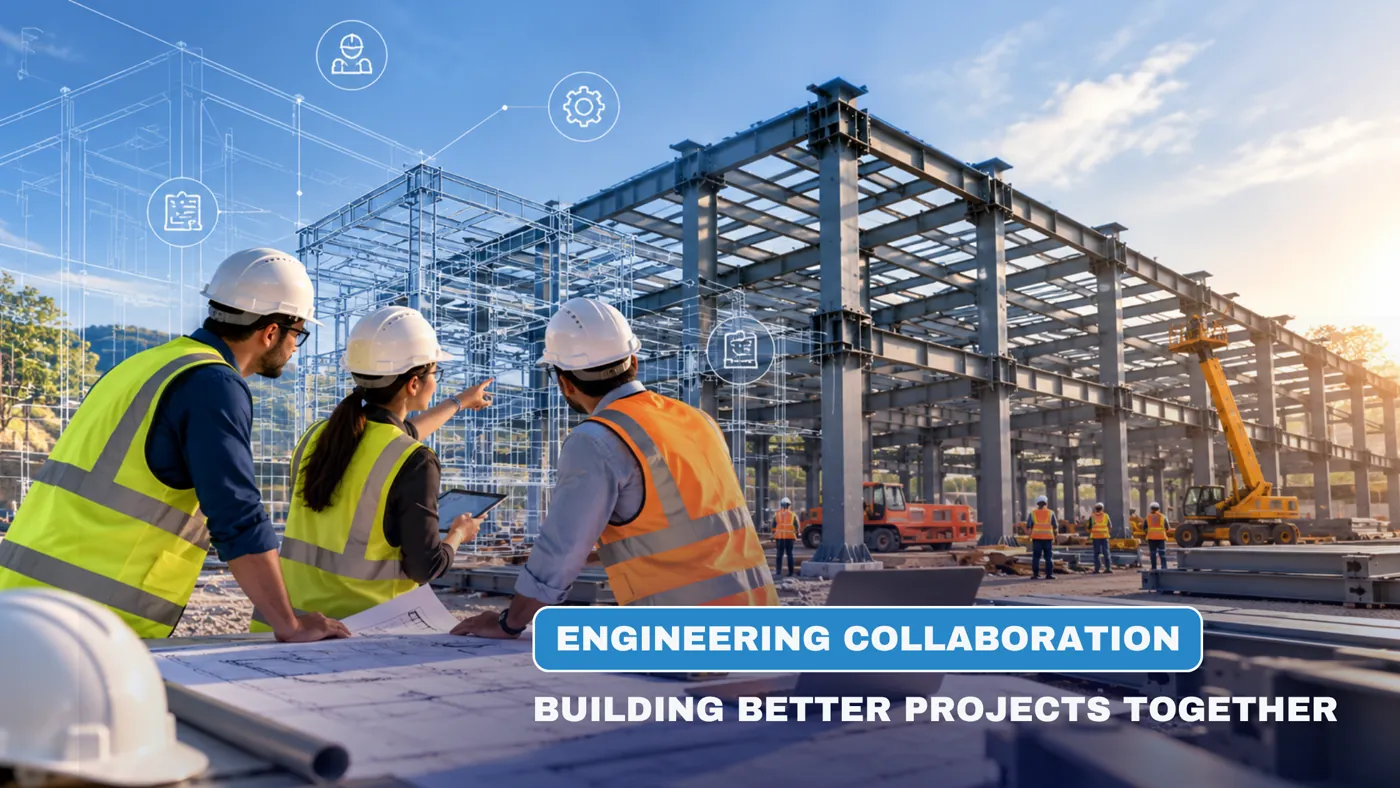
Engineering collaboration brings design teams, structural engineers, project managers, and execution teams together to improve coordination, minimise errors, and deliver projects more efficiently. Discover how collaborative engineering practices contribute to better project outcomes in Pre-Engineered Buildings (PEB) and structural steel construction.
What Is Engineering Collaboration?
Engineering collaboration is the process of bringing together engineers, architects, project managers, consultants, and construction teams to work towards a shared project goal. It ensures that design decisions, technical requirements, material specifications, and site execution plans remain aligned throughout the project lifecycle.
In Pre-Engineered Building (PEB) and structural steel projects, effective collaboration helps teams coordinate structural design, fabrication, transportation, and on-site erection.
Why Is Engineering Collaboration Important for Project Success?
Successful construction projects depend on more than individual technical expertise. They require seamless communication and coordination between every team involved.
1. Improved Design Accuracy
When design engineers and execution teams collaborate from the beginning, potential design conflicts can be identified before they become costly site issues. Shared technical inputs help ensure that structural drawings, connections, and project specifications align with actual site requirements.
2. Reduced Errors and Rework
Miscommunication between departments can lead to incorrect drawings, material discrepancies, and delays during fabrication or erection. Collaborative reviews help identify inconsistencies early, reducing avoidable rework and improving overall project efficiency.
3. Better Project Scheduling
Coordination between design, procurement, manufacturing, and site teams helps keep project activities aligned. When everyone understands the project timeline and their responsibilities, teams can plan resources more effectively and minimise unnecessary delays.
4. Cost and Resource Optimisation
Early engineering coordination can help identify material requirements, fabrication constraints, and construction challenges before execution begins. This supports more informed decisions, better resource utilisation, and improved cost control.
5. Enhanced Construction Quality and Safety
When engineering specifications and site execution plans are communicated clearly, teams can follow consistent quality standards and identify potential safety concerns earlier. This is particularly important in structural steel fabrication and PEB erection projects.
How Engineering Collaboration Strengthens PEB Projects
Pre-Engineered Building projects involve multiple interconnected activities, from initial design and structural analysis to fabrication, logistics, and on-site assembly.
Design and Structural Engineering Coordination
Close coordination between design and structural engineering teams helps ensure that building requirements, load considerations, connection details, and drawings are properly aligned.
Fabrication and Site Execution Alignment
When fabrication teams and site engineers work with coordinated drawings and updated project information, they can reduce discrepancies between manufactured components and site requirements.
Timely Communication Across Project Teams
Regular progress reviews, clear documentation, and timely technical updates help teams address challenges before they affect project schedules or quality.
Best Practices for Effective Engineering Collaboration
Organisations can strengthen engineering collaboration by adopting a structured approach throughout the project lifecycle.
- Establish clear communication channels: Define responsibilities, reporting processes, and escalation procedures.
- Use coordinated engineering drawings: Ensure relevant teams work with the latest approved revisions.
- Conduct regular design reviews: Identify technical conflicts before fabrication and construction.
- Align project milestones: Coordinate engineering approvals, procurement, fabrication, and erection schedules.
- Encourage cross-functional problem-solving: Involve relevant stakeholders when evaluating design changes or site challenges.
- Monitor project progress: Track milestones, quality requirements, and pending technical decisions.
The Role of Engineering Collaboration at Adoriva Infratech
At Adoriva Infratech, engineering coordination is an important consideration in delivering Pre-Engineered Buildings and structural steel solutions. Aligning design requirements with fabrication and site execution helps support project quality, efficient planning, and smoother coordination across project stages.
A collaborative approach enables project teams to address technical requirements systematically and work towards reliable, well-coordinated construction outcomes.
Conclusion
Engineering collaboration is a key contributor to successful construction projects. By improving communication, strengthening design coordination, reducing avoidable errors, and aligning execution teams, businesses can enhance project efficiency and quality.
For PEB and structural steel projects, a coordinated engineering approach helps create a stronger foundation for timely and efficient project delivery.
Planning a PEB or structural steel project?
Get in touch with Adoriva Infratech to discuss your project requirements.
📧 Email: sales@adorivainfra.co.in
📞 Call: +91 7666964553